

2025 Newsletter
A Note from our Director
Why Dialogue Now?
For over a decade, we have been teaching and learning about dialogue, not just as a way to communicate, but also as a powerful educational practice. Time and again, in different moments in different ways, both on campus and in other communities, we have seen its impact: dialogue brings people together, generates new knowledge and collective meaning, and challenges assumptions about people and ideas. It’s a way of thinking and connecting that can transform how we learn, live, and collaborate with others.
Dialogue is all the more important when we understand ourselves as agents in a pluralistic society. Pluralism recognizes that difference is a social and cultural fact, with consequences and opportunities for society, politics, and our everyday lives. Today, we are seeing the outcomes of treating our differences as points of contention rather than resources for connection and learning. Unproductive argumentation, competition, and debate seem to shape our public and personal experiences.
At CDP, we advocate for dialogic processes and interventions to reorient the way we understand and relate to ourselves and others within our pluralistic society. We remain committed to fostering human interaction that prioritizes deep understanding over winning an argument; curiosity and intellectual humility over dismissing other perspectives; strengthening human connection over deepening divides; and working collectively to create new solutions rather than insisting on a single, “right” answer.
This newsletter features our ongoing work to make this vision a reality. We hope you will enjoy learning about our efforts this past year, and we thank you for your support in our endeavors.
Adi Grabiner Keinan
Associate Vice Provost for Undergraduate Education
Director, Center for Dialogue & Pluralism
Year in Numbers
178,320
minutes (123 days) of dialogue facilitated across Intergroup Dialogue (EDUC/ILRID 2610) and Community at Cornell, two of our key offerings for undergraduate students
4,397
number of incoming undergraduate students who completed Community at Cornell across 98 interactive facilitated sessions
100
%
CDP peer facilitators who reported feeling more interested in forming meaningful connections across difference in perspective following their semester facilitating Intergroup Dialogue (EDUC/ILRID 2610)
100
%
students who took Dialogue Across Differences for Public Policy (PUBPOL 3880) who would recommend it to someone who wanted to learn more about collaborating with others to create change
94
%
incoming MPA students who indicated that the CDP session during their orientation made them feel more connected to other people at Cornell
98
%
West Campus House System staff who indicated that the skills practiced in their CDP training program will help them communicate more effectively with people whose perspectives differ from their own
10
number of Cornell schools and colleges that partnered with the CDP team through collaborations with faculty and staff
Name Change
Since our last newsletter, we have changed our name! We are no longer the Intergroup Dialogue Project. Natasha Steinhall, CDP’s Academic Initiatives & Operations Manager, led an extensive process that started in 2023 with our students, alumni, partners, and team. In consultation with University academic leadership, we picked a name that better reflects our program’s growth, pedagogical approach, and impact since its inception in 2012: the Center for Dialogue & Pluralism.
Our Updated Mission & Vision Statement
In a society characterized, in many ways, by division and polarization, the Center for Dialogue & Pluralism (CDP) advances intentional engagement across, and about, differences as an essential democratic practice. Leveraging the diversity of knowledge, perspectives, and experiences at the university, CDP’s educational work focuses on building capacity in four key areas: human connection, dimensions of difference, intentional communication, and collaborative change.
Learn more about CDP’s work and key development areas.
A new name and a new look!
This Year’s Achievements
Interfaith America Grant
CDP won a grant from Interfaith America to help embed pluralism into academic life at Cornell. We are excited to collaborate with Interfaith America on Civic Pluralism in the Core Curriculum Grant.
This grant, a collaboration with the Einhorn Center for Community Engagement, supports the development of a new undergraduate course, Practicing Pluralism. Students will practice skills for civically engaged dialogue that will equip them to address the complex challenges our world faces today.
CDP-Brooks Partnership
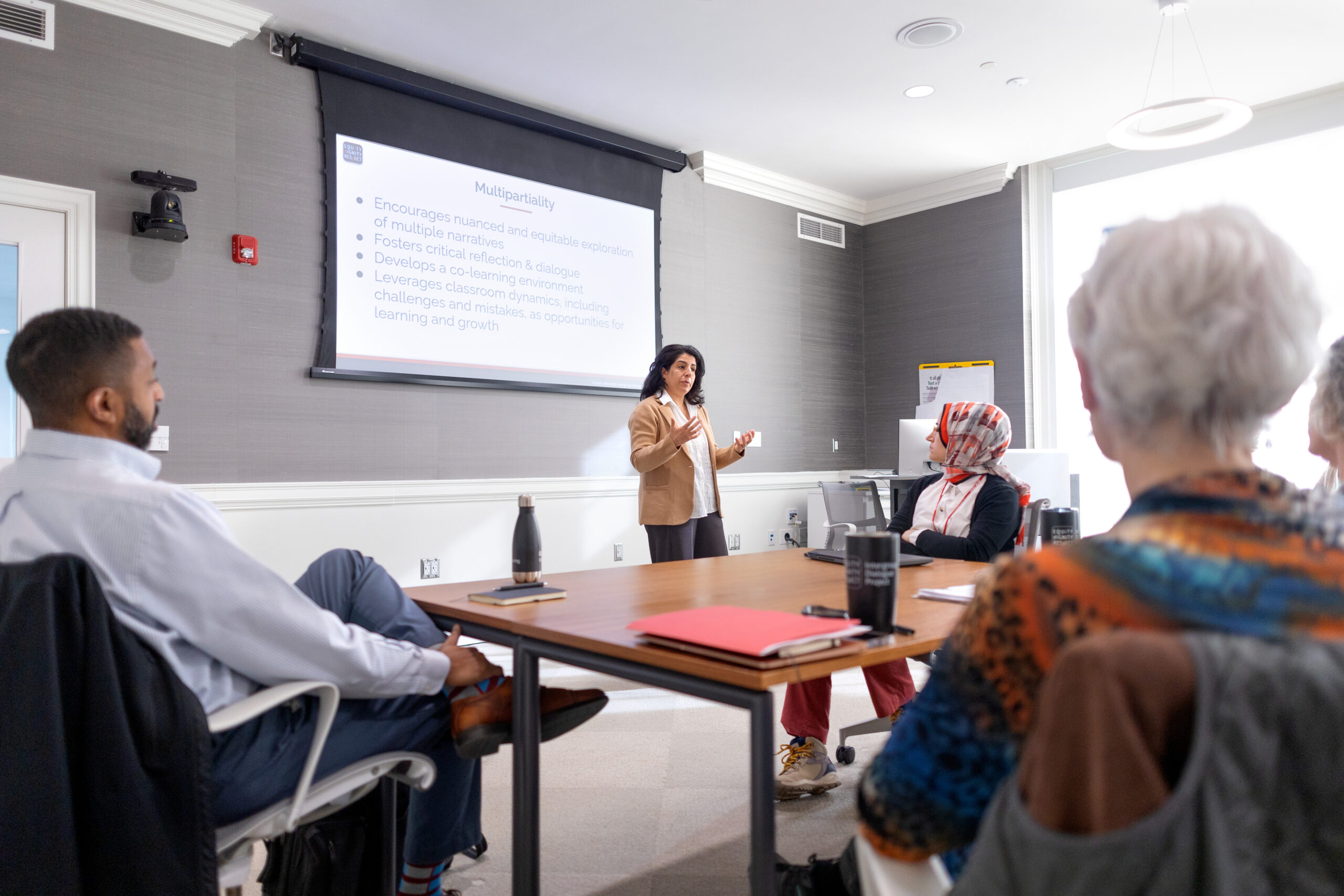
Over the 2024-2025 Academic Year, CDP collaborated extensively with the Jeb E. Brooks School of Public Policy to advocate for dialogue’s utility and importance for future public servants. This work included sessions with Brooks academic leadership, workshops with incoming MPA & MHA students, and the development of a new course, Dialogue Across Differences for Public Policy.
Pathways to Purpose
With the Brooks School and the College of Human Ecology, CDP is launching a 1-credit course, Pathways to Purpose, that encourages students to lead with purpose in their future careers and reflect on how they can support democratic and civic engagement through their professions in health, law, tech, and business.
TCAM Session
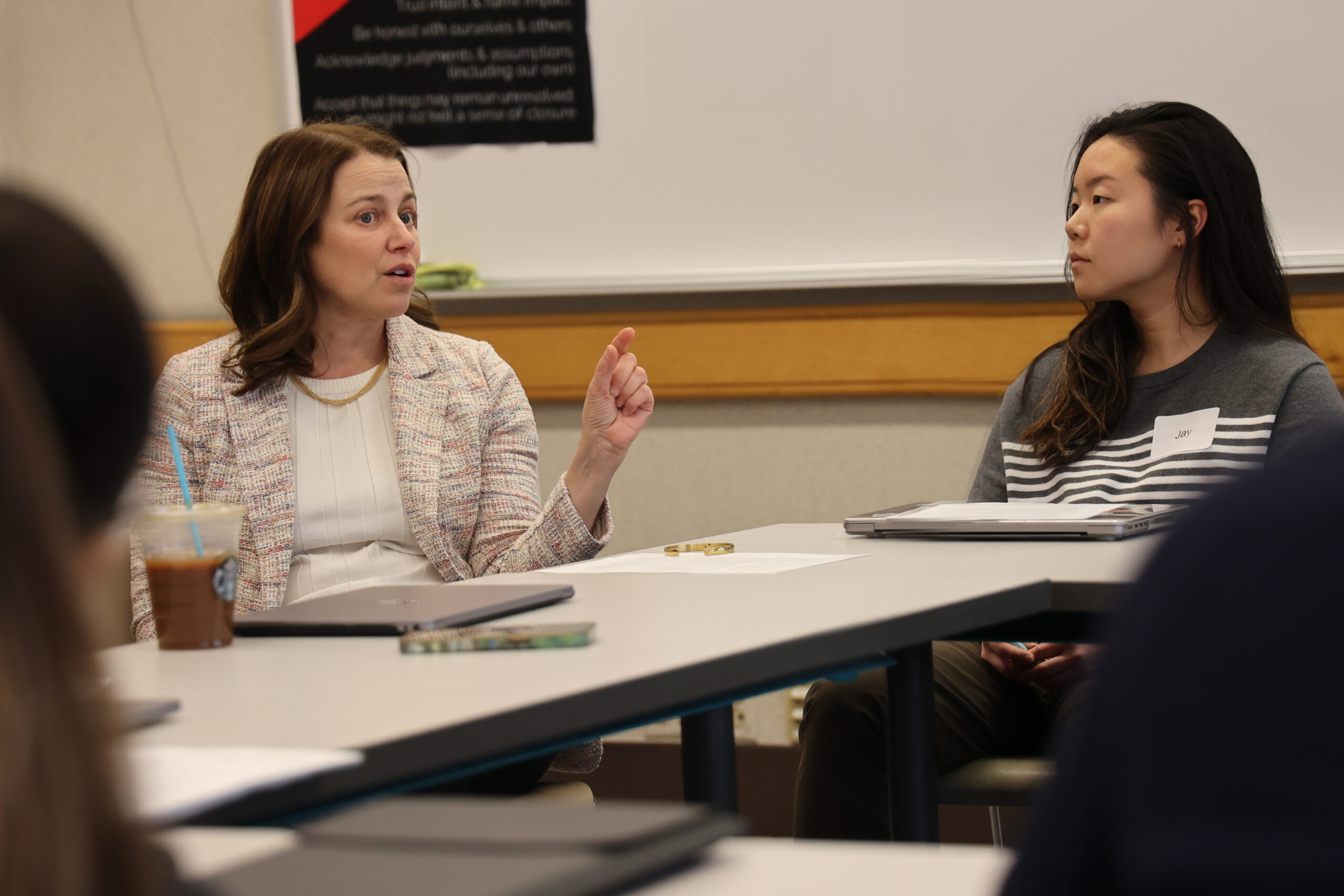
Adi Grabiner Keinan, CDP Director and Associate Vice Provost for Undergraduate Education, spoke about the importance of dialogue and pluralism education at Cornell’s Trustee & Council Annual Meeting in October. She highlighted CDP’s impact at Cornell and advocated for extending CDP’s work beyond campus.
eCornell for Cornell Alumni Leaders
CDP facilitated a dedicated offering of its eCornell course, Dialogue Across Difference, for Cornell alumni leaders (including Cornell Mosaic, Cornell University Council, and the President’s Council for Cornell Women) to help them foster community and practice meaningful dialogue in their service to the university.
Spotlights
Research & Assessment
Impact on Alumni
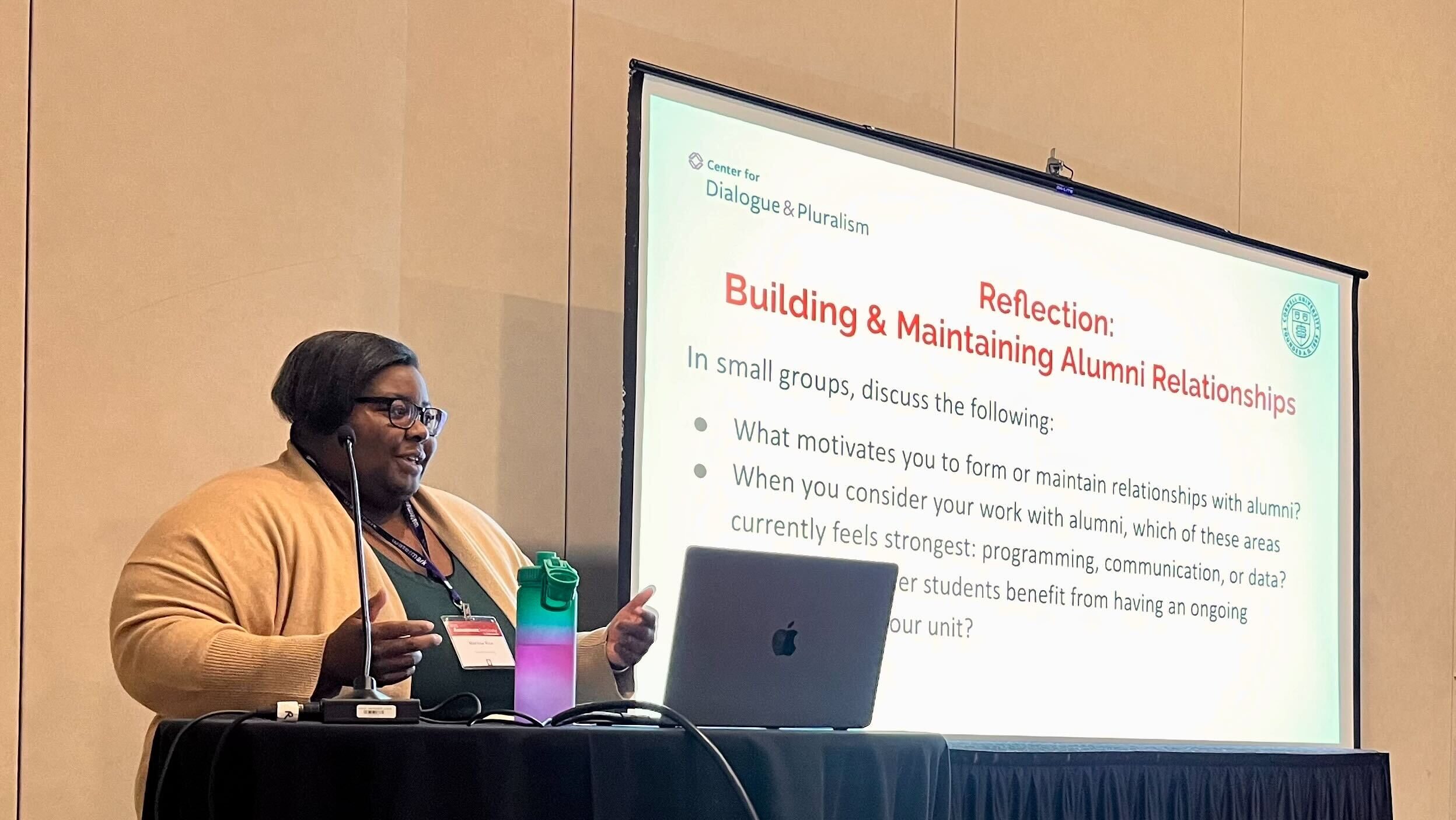
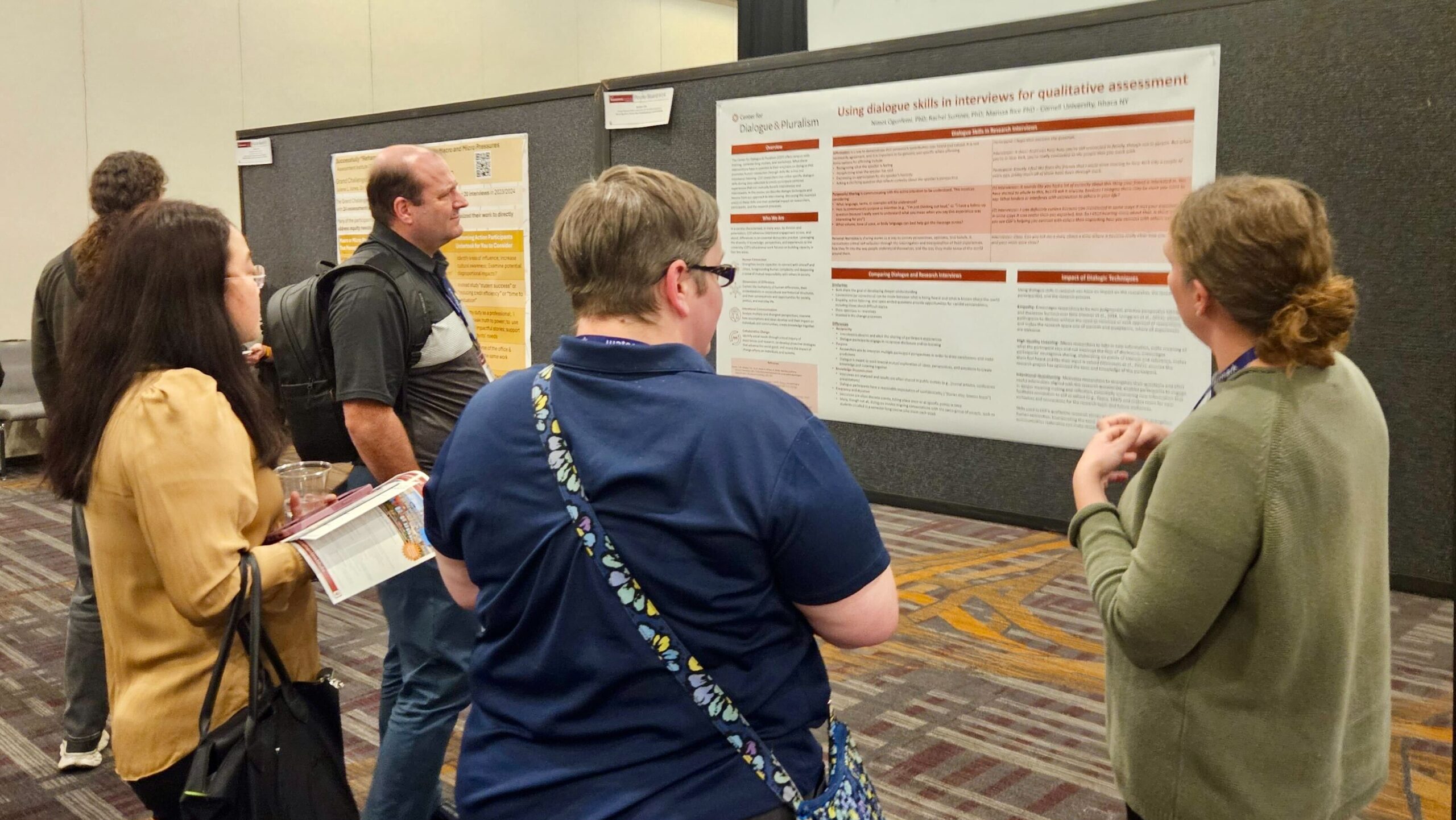
CDP’s semester-long course, Intergroup Dialogue (EDUC/ILRID 2610), has been taken by thousands of undergraduates and co-facilitated by hundreds more. In the past year, we set out to understand whether and how alumni continue applying what they learned during their time with us. Marissa Rice and Rachel Sumner, members of the CDP research and assessment team, presented our preliminary results at the 2025 Assessment Institute, an annual conference for higher education assessment scholars and practitioners.
This effort is motivated by our own curiosity about alumni’s experiences and a key gap in research on dialogue courses more broadly. Previous scholarship relied primarily on data collected during or immediately after the semester when the class was taken. We are hopeful that our findings will address gaps in existing research on dialogue courses and help us better understand CDP’s impact beyond Cornell.
Read more
We conducted a mixed-methods study that included a survey and interviews. Participants were Cornell alumni who graduated between 2011 and 2023, with 105 former EDUC/ILRID 2610 students and facilitators filling out our survey, along with 55 graduates who never took our course. In response to a question about how their time at Cornell influenced the way they communicate, one 2018 grad said they were better “able to listen to and communicate constructively with people with differing backgrounds and perspectives” because of CDP’s class. Compared to alumni participants who never took the course, those who completed or facilitated EDUC/ILRID 2610 scored significantly higher on a measure of conflict skills, suggesting that they’re better equipped for difficult conversations and disagreements.
During hour-long interviews with 44 of these former EDUC/ILRID 2610 students and facilitators, Nimot Ogunfemi, another member of the CDP research and assessment team, and Rachel asked about connection, communication, and change. It was fascinating to hear the range of conversations in which they’re using skills like active listening and affirmation: with colleagues who have diverging priorities, fellow community members on separate sides of a policy issue, and, perhaps not surprisingly, family whose perspectives differ from their own.
Our initial analysis of interview data suggests that alumni who took or facilitated EDUC/ILRID 2610 are less likely to avoid conversations across difference. Even if they believe that the interaction might be uncomfortable, many describe themselves as having the conversation anyway. One participant told us a story about talking across political differences with a family member and feeling that it helped to challenge her misconceptions, strengthen their relationship, and clarify “that we do share values, although we place different weight on those values.”
In addition to using our findings to inform the growth and development of our educational programs, we also plan to publish them in peer-reviewed journals to inform scholars as well as outlets for higher education practitioners.
Teaching
Dialogue Across Political Differences
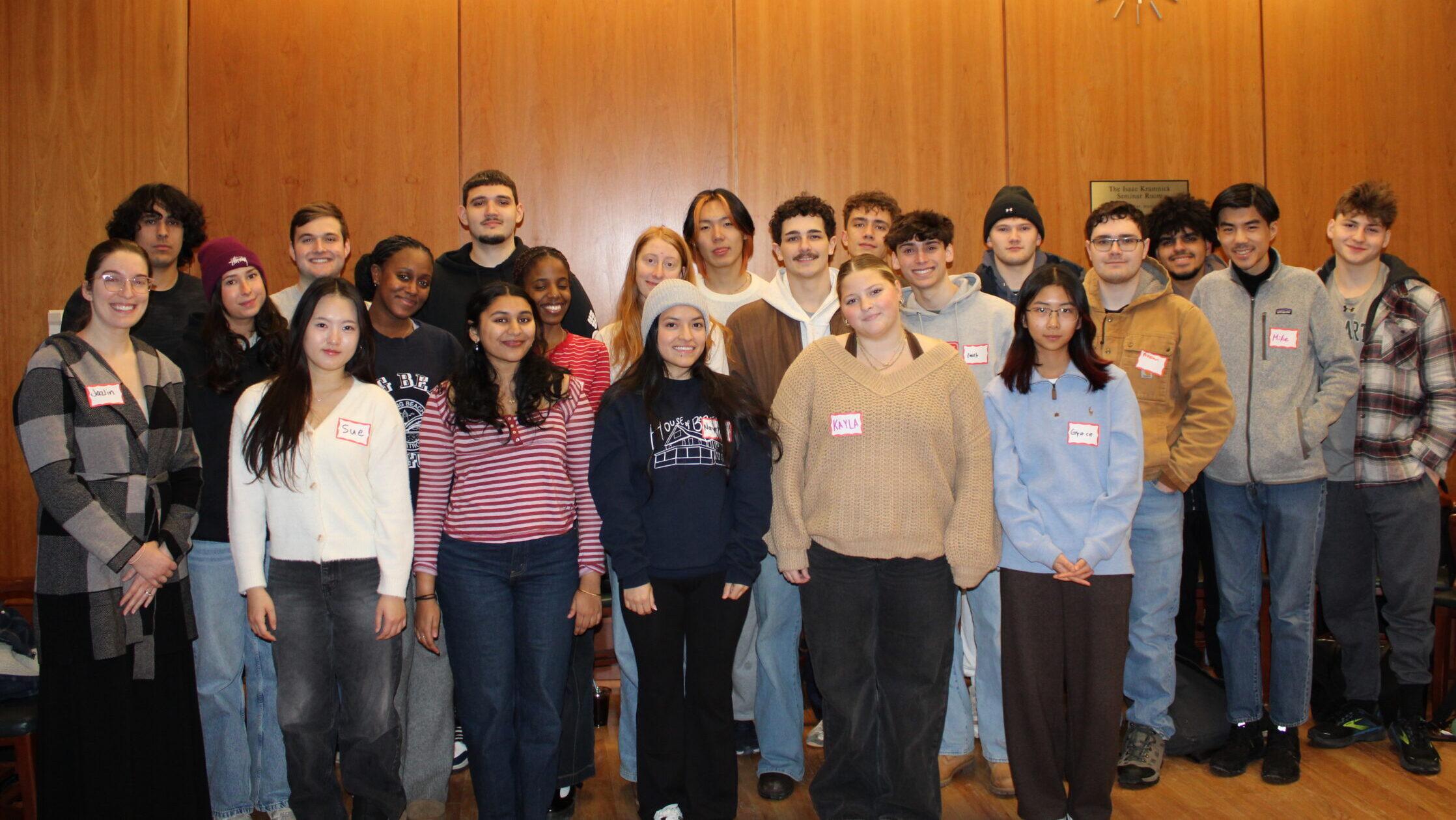
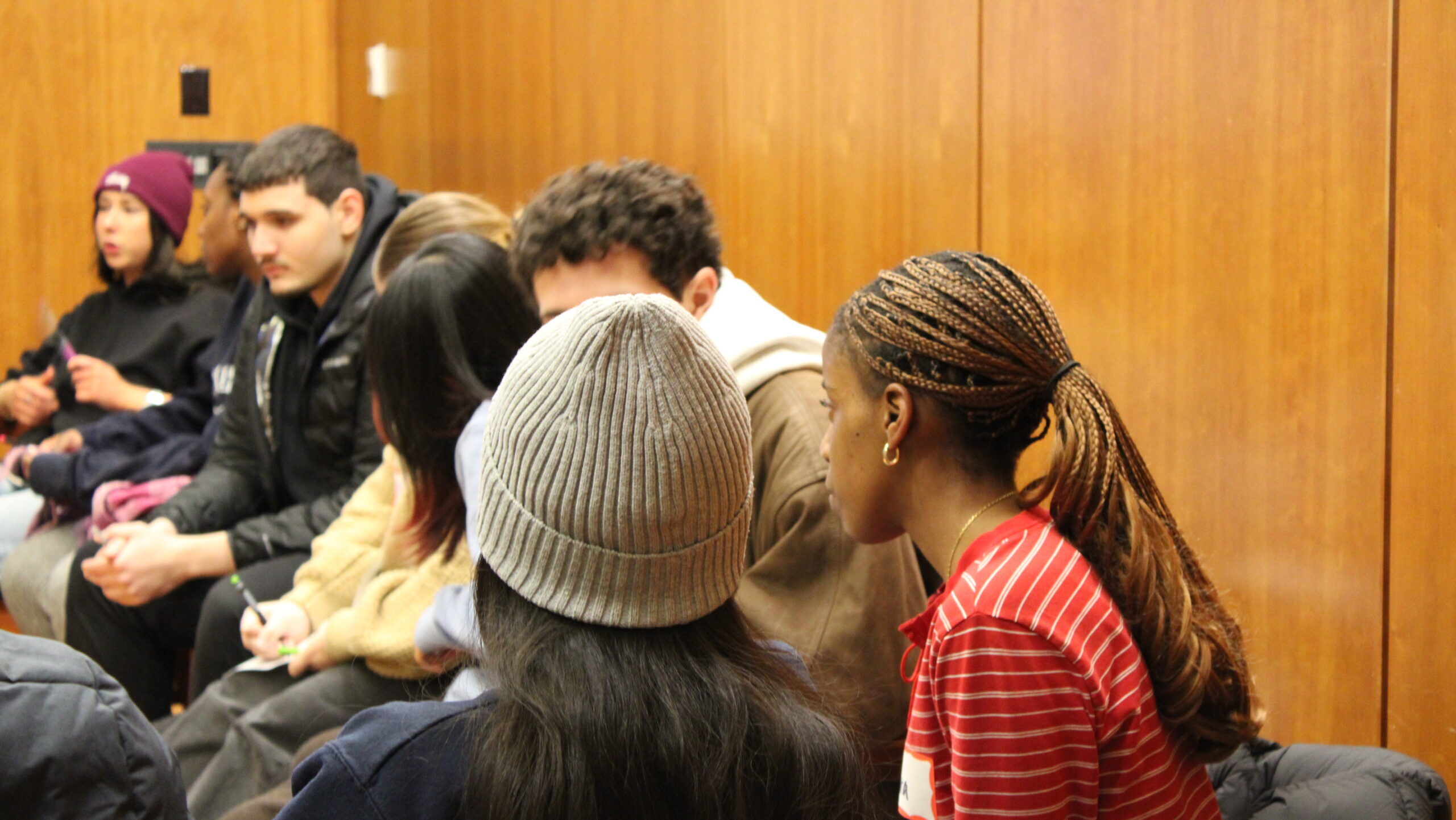
This past fall, CDP Lecturer Jazlin Gomez Garner taught another iteration of UNILWYL 1515: Dialogue Across Political Differences. Jazlin’s purpose for the course is to provide what many students felt like they were lacking—structured opportunities to dialogue openly about political issues: “many students have received explicit messages that they are not supposed to talk about politics at home or even at school. They haven’t been given the tools to have these conversations.”
Recent news might lead us to believe that any college class about political conversations would either be contentious or silent. The key was establishing from the outset a common purpose for political dialogue: mutual understanding about the issues and each other. In addition, Jazlin introduced clear community expectations as well as some concrete skills for communication across differences.
Read more
Students in the course were both willing and eager to engage in political dialogue about controversial issues and share honestly about experiences that informed their political positions. Even when the stakes for political expression can feel so high, students were curious and capable. They rose to the challenge of genuine dialogue even when conditions weren’t perfect.
The course’s status as a Learning Where You Live course helps with engagement. These for-credit courses are designed to build relationships among students and faculty while they explore topics of interest. Because of this focus on relationship-building, Jazlin can easily present content that challenges students to reassess their beliefs. She has brought in civics lessons to rectify knowledge gaps (e.g. what is gerrymandering?), conversations to rekindle students’ sense of political agency (e.g. making voting plans), and activities to engage with controversial issues like alternative energy policy, reproductive rights, and free speech.
For Jazlin, the course has emphasized the impact of reframing disagreement. Students came into the course afraid to disagree. By the course’s end, they found that engaging with differences both facilitated connection and clarified their own positions on political issues. Students proactively sought out counterpoints in their everyday conversations. This is something that Jazlin believes can be applied outside the course. We can exercise curiosity and humility to explore differences in perspective and where they come from, instead of dismissing them outright.
Alumni
The CDPAAC
Through a series of open alumni gatherings in 2022, we heard from our CDP facilitator alumni that they wanted opportunities to continue their development as dialogue practitioners and maintain a CDP community beyond their time at Cornell. This led to the establishment of the CDP Alumni Action Council (CDPAAC) in 2023. The CDPAAC works closely with CDP leadership to offer professional development opportunities for alumni and encourage connections among CDP alumni across various professions, regions, and interests.
Recent initiatives include online alumni dialogues on topics ranging from the crisis of connection to using CDP skills in the workplace, as well as micro-cohorts based on shared professional interests or pursuits.
Read more
We thank our first CDPAAC (Cole Johnston ‘20, Dylan Van Duyne ‘18, Elana Kupperman ‘16, Katelyn Fletcher ‘15, Hadar Sachs ‘17, Maya Portillo ‘17, Sara Aiken ‘18, Veronica Dickson La Rotta ‘18, and Victoria Phillips ’17) for their service in 2023-2024 and are pleased to introduce the members of our second CDPAAC whose terms run through 2026:
Alex Castroverde ‘23
PhD Candidate in Chemistry, University of Chicago
Jeannie Yamazaki ‘21
PhD Candidate in Counseling Psychology, University at Albany, SUNY
Kartik Ramukmar ‘16
Presidential Management Fellow, US Small Business Administration
Kyle Muña ‘21 (also a member of our first CDPAAC)
Senior Workforce Development Associate and Health Advocate, Silicon Valley Leadership Group Foundation
Nelson Liu ‘23
Consultant, Simon-Kucher
Why did you decide to join the CDPAAC?
KM: I am optimistic about engaging with and learning from alumni who are curious about how our uses of dialogue evolve post-graduation. In my professional life, the skills I’ve learned in CDP shape how I approach my work, especially as my organization brings together partners whose priorities, language, and decision-making cultures differ significantly. It is rewarding to see different generations of CDP facilitators remain curious and committed to leveraging our skills to the benefit of our communities.
How do you apply what you learned through CDP in your professional life?
KR: I like to apply active listening and LARA in my professional life. My supervisor has been in the job for over 20 years and knows a lot about small business government policy. As I learned about different policies and programs, I kept asking questions, listening attentively, and affirming what he shared. If I disagreed, I waited until he was done speaking and responded with my thoughts in a way that led to a collaborative solution. Using active listening and LARA allowed my supervisor to feel heard and respected, while it allowed me to learn from his knowledge.
What is your favorite CDPAAC initiative or program?
AC: The alumni dialogues are my favorite CDP initiative. I love seeing what other alumni do and how their experiences in CDP have impacted their workplaces. They remind me of how CDP allowed me to explore identities, opinions, questions, even when I did not know the answer or understood fully. I often feel pressure to flesh out perspectives before putting them out there, to make sure opinions or even questions are perfect. But, I enjoy the genuine dialogue about controversial or even mundane topics that allows for exploring our “half-baked” ideas.
How has your understanding of dialogue changed after college?
JY: After college, I haven’t had as many opportunities to be in structured dialogue spaces. I think I used to emphasize the form of dialogue: longer conversations, talking face to face, setting clearly defined subjects. Now I think of dialogue as a way of being and orienting to other people as well as the possibility for deeper understanding and connection. I find little moments for dialogue throughout my day to day life. I’ll also add that my understanding and appreciation of the community agreements just deepens over time.
What do you miss most about facilitating for CDP?
NL: Taking and facilitating EDUC 2610 is easily one of the most formative experiences of my adult life, and the CDP community is full of leaders and community members who have a penchant for real change and justice. I miss the structure and the energy of being part of a group that has the same goal and is co-developing skills, putting in hours for that end. It was most wonderful to be in community with people that had shared responsibilities and rituals as myself, whether it was coaching, practicum, or session.
New Face
Welcome Colleen Eils!
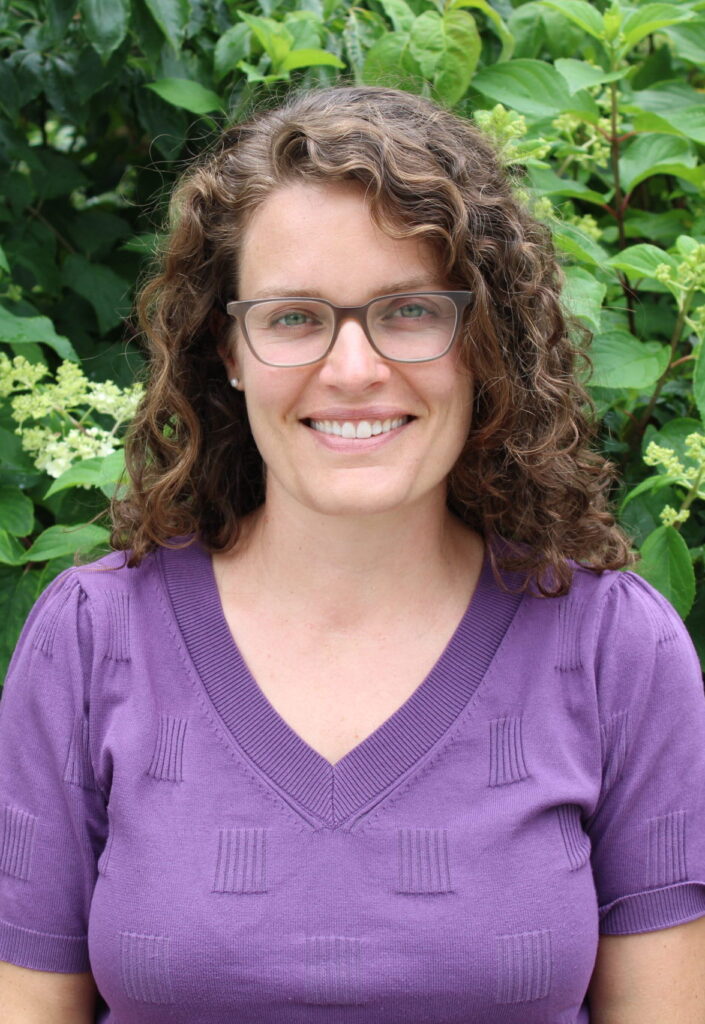
Colleen Eils joined the CDP team as Curriculum Specialist & Lecturer in July 2025. She comes to CDP from West Point, where she was an associate professor of English and director of a multi-disciplinary fellows program focused on intentional communication and peer mentorship. Invested in cultivating curiosity and deliberate inquiry on campus, she supports CDP’s mission through teaching and curricular development.
What are you most excited about in your new role?
Dialogue is such a deeply human endeavor. Listening carefully to someone else, cultivating curiosity, sustaining interest and openness – these are tools and practices that are at once urgent and necessary for our contemporary political and social landscape and also built on timeless humanist principles. It’s energizing to think alongside such thoughtful, intentional colleagues & peer facilitators to consider how to best meet our moment. I’m excited, too, about the prospect of developing new courses to reach different populations across campus.
What’s something you’ve learned in your time with CDP so far?
I enjoy learning more about how to build trust and openness in classrooms. Talking with CDP facilitators about strategies – sometimes very different from approaches I’d take! – helps me strengthen my own approaches to the classroom. I’ve been impressed by what happens when students in EDUC 2610 listen carefully to a classmate without having the responsibility – or expectation – to defend their own position. That freedom opens space for curiosity and sincere attention, which can shift students’ orientation toward themselves and others.